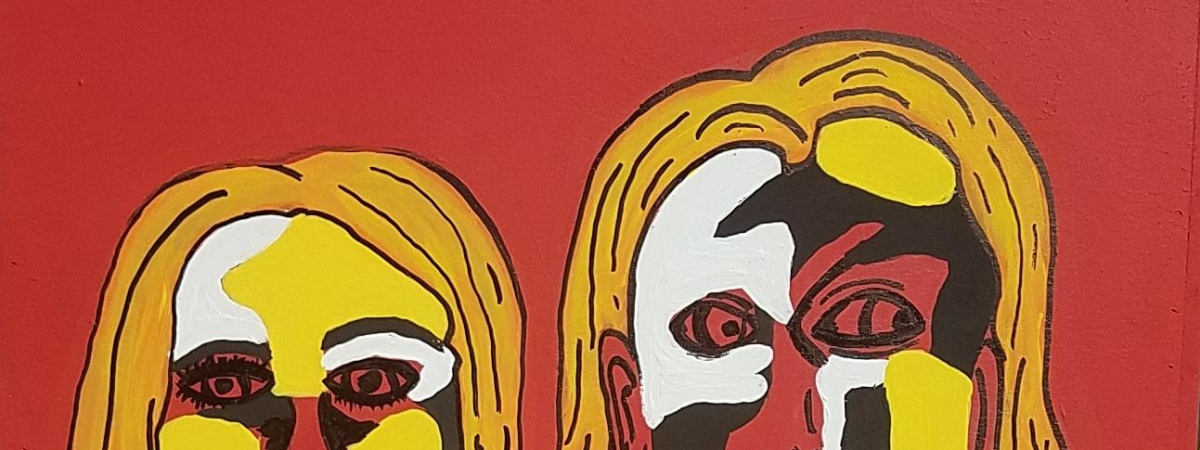
Our friends at Do512 spoke with Animal Collective for a rare retrospective about their classic album Sung Tongs and asked some weird questions along the way.
Read the whole interview below -- and win a pair of free tickets to their July 25th show at Ogden Theatre here.
----------------------------------------------
Sung Tongs is the sound of unfettered expression.
Originally released in 2004, the record (which solely features Avey Tare and Panda Bear from the band) opens with an abrupt chorus of descending static and closes out with the sound of gently plucked guitar notes. Along the way - twelve surreal, deeply exotic songs that alternately bounce, bend and bob along to the secret logic of some common thread.
By turns playful, paranoid, tranquil, and bold, Sung Tongs is a collection of very different moods. Winter’s Love shines with holiday contentment, Visiting Friends provides a disembodied sound collage mood piece, while Who Could Win a Rabbit gallops along at a dizzying, (seemingly unsustainable) breakneck psychedelic pace. Variety, both in novel song structure and sound production, abounds throughout.
Widely considered a favorite in Animal Collective’s catalog and a modern classic in general, Sung Tongs was performed to no small fanfare at Pitchfork's 21st Anniversary in January of 2018. Encouraged by the reception, the band announced a tour of the material. We spoke with Animal Collective’s Avey Tare about revisiting the older material, unconventional recording techniques, his advice to new musicians, and more. Read our Strange Inquiry with Animal Collective below.
Do512: You'll be performing Sung Tongs at The Paramount Theatre in a little over a week. What memory sticks out when you think about Austin?
Animal Collective: I first went there on tour in 2001, and I've been going there most years to play. Definitely, Emo's sticks out as an early venue that we played a bunch and just hanging out there in that area. Breakfast tacos, so many good swimming places. I've just gotten to like it more and more, the more I've been there.
Animal Collective has had so many shifts and evolutions; what makes Sung Tongs such a special thing to revisit? Were you guys surprised by how instantly-legendary that initial Pitchfork gig was?
Animal Collective: Yeah, definitely. It kind of blew us away. We thought we were going to be playing more of an intimate style show - not in terms of the crowd, we knew a lot of people would be there because of ticket sales. But, we did not expect for people to go off like they did. It just made for a great time. It's cool to revisit now because in the past few years we've been doing stuff that's more electronic and uses a lot more equipment. The initial inspiration for doing Sung Tongs in 2003, to begin with, was for a similar reason. We had just done our record, Here Comes the Indian and come off touring for that, and just the amount of gear and all of the stuff we were taking around with us, we just wanted to simplify things. It happened to be at a time when we were all off doing separate things, which is kind of how it is now. You know, for Noah and I to be able to do this thing now has been good. In terms of Noah and I to just be able to play music together with just guitars. It kind of keeps that connection between us going, you know?
It's a fairly bare-bones setup, which might be part of why it's so cool to hear the sounds you guys are making up there.
Animal Collective: Yeah, definitely. It was our goal to keep the whole new process of it minimal in all respects. The stage setup is pretty minimal, we're not doing a lot of projections and that kind of thing like we've been doing the past couple record cycles. So we're keeping it in line with our feelings of how the original record was in that time period of making that music.
In that same vein of it being a very DIY record, I've read you guys slammed a door to get a certain sound on Kids on Holiday. Was there any other unconventional recording techniques that you used to achieve a sound you wanted?
Animal Collective: That was really one of the first experiences I remember like that. Noah and I have been recording our own music since high school, but we got Rusty Santos involved when we met him in New York and that was kind of a big game changer for us. In terms of recording our music, he's a really special guy and a good friend of ours still and still records stuff with us here and there. He kind of taught Noah and I a lot about recording acoustic guitars, which is something we had never really honed in on before. We did a lot of layering with the guitars and different setups. We recorded it out at my parent's place, they live out in Lamar, Colorado. Kind of in the dust bowl area of southern Colorado. They have a little storage house out there, but it was empty back when we did that. We set up in different configurations around the room. Sometimes we were sitting up on tables, sometimes we were on the floor. We just wanted to see if we could give every song a different feeling and texture.
Kids On Holiday really evokes the anxiety of travel and there's something kind of a little bit sinister about it. Is there a particular story behind it?
Animal Collective: No, that one was really was just that we had started touring a lot around that time. Particularly that year of writing that music we probably toured the most we ever have and maybe ever will, I think. We did a tour with Four Tet and Múm and recorded the record all in the year, so it was just a lot of traveling around a lot for me. Being in different airports, being in a lot of train stations... We toured a lot by train, especially in Europe back then. Those were some of the first times we went to Europe, just Noah and I. It was really just trying to hone in on that movement, you know? All that traveling, and how bonkers it was making me.
Has travel gotten easier for you?
Animal Collective: Well, I used to hate flying. It frightened me to death. I literally would have a lot of paranoia about it, up to the point of canceling some. We had a Japanese tour that Noah and Josh ended up going on. Or maybe it was even just one Japanese show, but I was just so freaked out and paranoid that I had to cancel it. It was giving me just the worst feelings. But since then, I've done it so much that I don't... As Brian and I say lately, we just sort of have a Zen mentality about it. We do it so much that we kind of just go in and let go of control, which is kind of what we do with music so it works in that way. There's always will be difficult things about traveling and being around that many people, but you've gotta grin and bear it and get through it.
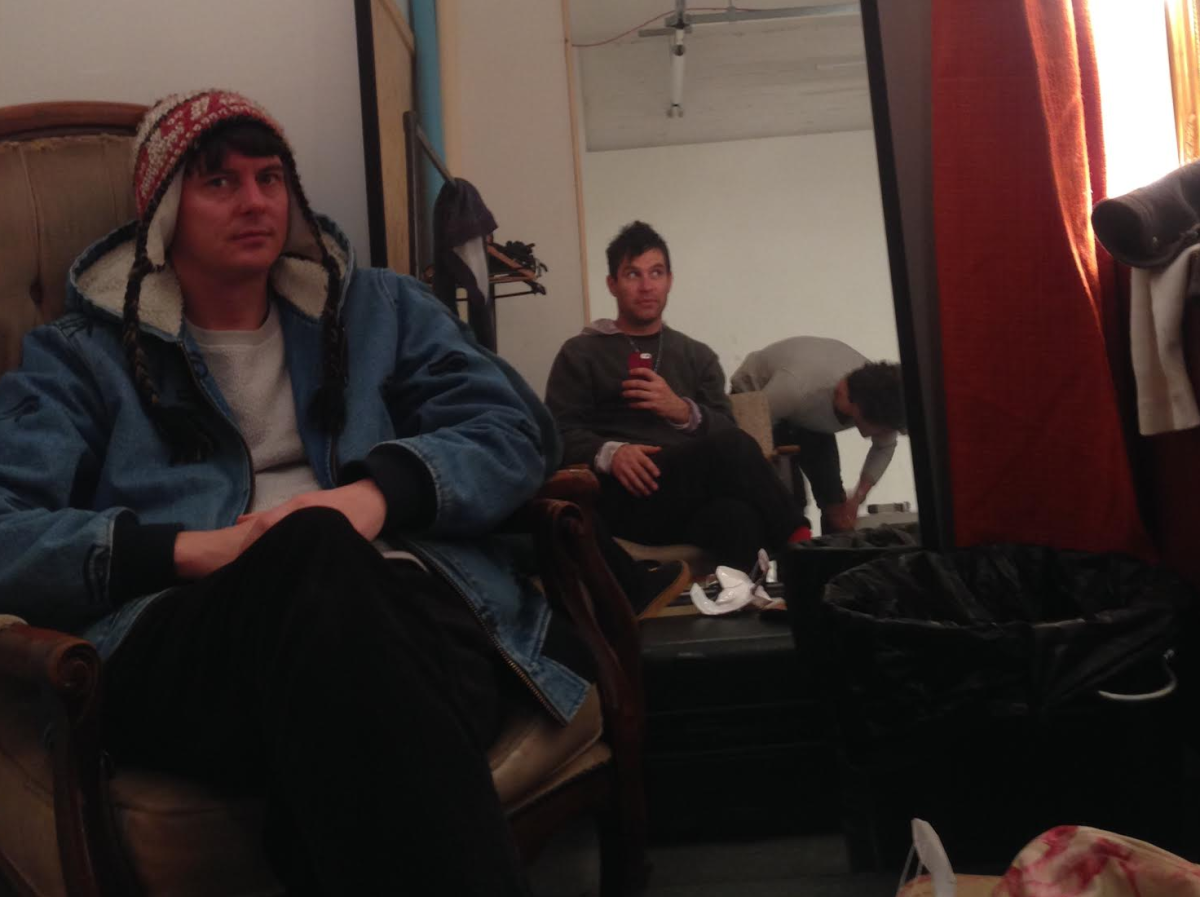
Photo Credit: Dave Portner
When you look back at the making and mixing of Sung Tongs, is it a happy time overall?
Animal Collective: Definitely. Noah actually just brought up, when we were on the road together, that we mixed some of that at his parent's house in Baltimore, and I have absolutely no recollection of it whatsoever. I do remember some mixing we did in New York, but I think that was kind of towards the end of it. It was a little difficult, personally, for Noah and I, just because we were around each other all of the time. We had spent a couple years working at the same record store together, and we would practice together. So after that year, especially by the time we were finished tracking... I don't remember where mixing came in that time frame, maybe that's just why I don't remember like I blocked it out or something. (laughs) It was just a lot of close quarters for Noah and I. Once we got through it and got through the touring it smoothed out. We just needed some space again from each other. In general, though it was a good time. That's where songs like Winters Love and some of the more upbeat Who Could Win a Rabbit? tunes come from. Feeling good and living in New York in those days. I lived in Crown Heights and really enjoyed it there. A lot of that is what it's about, for me.
Your voices, more so than on any other Animal Collective release, blend together on Sung Tongs. Sometimes they're indistinguishable. Was that an intentional choice?
Animal Collective: Yeah, I think it was just practice, really. One of the last times we were hanging out, Noah brought up our sound guy was talking about how mixing our voices now live at Animal Collective shows is different and difficult. He was saying mine seems to be easier to mix and Noah's is harder to get these days for some reason. But Noah brought it up that sometimes our voices can sound eerily alike, and I hadn't thought about that in awhile. We've been doing so much to get them to sound different in the past few years. But yeah, back in that time we were doing a lot of vocal experimenting... and the name kind of says it; that it was supposed to be about the singing and about having a lot of voices. Since then, we've tried to see what we could do with the voice and have the voice be a very instrumental part of everything and use it for different sounds. It was a goal to have the voices overlap and be indistinguishable in terms of who does what. I think we like a lot of singers, and especially at that time, were listening to stuff like The Everly Brothers and The Louvin Brothers. These families that have people that have voices that are similar and that's what makes them blend, especially harmonically, very well. I think we worked a lot at that.
Was there anything you did during the recording to get in the right head space?
Animal Collective: Well, we put a red light on the whole time. We usually try to set up some sort of atmosphere for all of our records that we're recording. Back then it usually just consisted of getting a colored light (laughs) and picking maybe a specific color for the record and just rolling with it. For Sung Tongs, for whatever reason, we picked the color red and had a red light on in the studio the whole time.
What did your days look like back then? Would you guys record all day?
Animal Collective: Yeah that's usually what our recording style is. We do better work earlier on in the day, and we tend to work so many hours that by the nighttime we're kind of dead and beat anyway. We'll usually start at ten or eleven and then go for about ten hours.

Has revisiting this material influenced what you might do next? Are you open to the idea of your past inspiring your future, or do you open this chapter and then close it when it's done?
Animal Collective: It's a little bit of both. I think there's a lot of unexplained or unspoken stuff that just happens when you connect with something like that and it just kind of lingers with you or opens up these windows or places that have been closed maybe, and just stay that way or open up again or maybe they open up new ideas. This just came at a time for Noah and I, where I had been doing a lot of guitar playing anyway, for my solo stuff and then I think it really inspired Noah to roll with more guitar stuff too on his new record that he's about to release. It's a lot more acoustic stuff. So I think that definitely, this time working on it has inspired and pushed us into new territory and the thought of reconnecting with these instruments. In terms of a new Animal Collective thing, it's still too early for what we're doing to know exactly how we want a new record to sound. We've all been working on stuff here and there, but I think it definitely will play a part. In terms of reconnecting with an audience this way too, just sort of these bare-bones guitar players up there and connecting to the audience, for us, is new and feels like old thing as well. It's very interesting, to say the least.
Even though you've claimed it wasn't intentional to actually give the advice to not seek higher education on the track College, I'm curious if there are any real pieces of advice you'd give if the universe had a suggestion box?
Animal Collective: For me, it's just trying to connect. I would like to advise people, especially for musicians, because I feel like music is what I know best in terms of my life, for a while, up to this point. I think connecting to yourself, and finding yourself through music or any art that you do is healthy advice. It can be difficult, and it takes a lot of work. I just think working hard at something and not giving up and pursuing something can always benefit. Especially for somebody who wants to play music, those would be my two pieces of advice. Beyond, you don't have to go to college...(laughs)
All your albums feel very visual, as well as audial like it's a complete package and have read that you've described yourself as someone who has synesthesia...
Animal Collective: That's not true. I've talked about it a lot in interviews and it definitely is a phenomenon that interests me, but I've never viewed myself as having it. I don't know where that rumor came from and is definitely a thing that gets spoken about out there.
Well, let's squash that rumor!
Animal Collective: However, I am a very visual person, so not knowing much about synesthesia or not having ever been diagnosed with it myself, I still think that I visualize music and I see color when I hear music and I don't eat drugs to do that. If that is synesthetic or whatever that would be called then I guess. For me, it's a visual thing, music, and for all of us in Animal Collective. How we communicate about it a lot of time is that way.

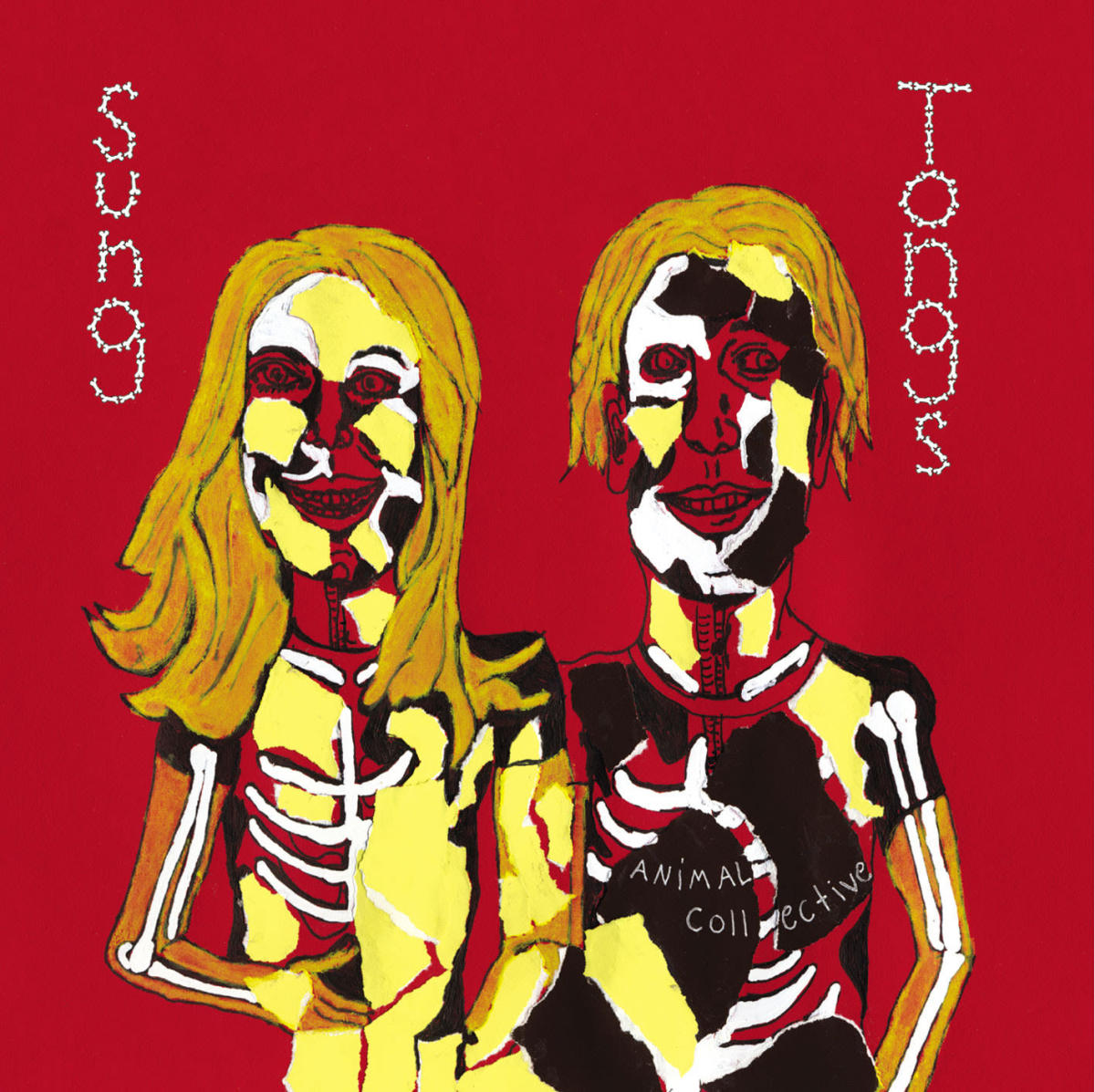
Does Sung Tongs, when you think about it visually (aside from the cover art) does it look like something to you?
Animal Collective: It kind of moves all over the place, I think, because the mellower moments definitely have a different feeling. It's just moody to me, so while we are playing it I don't feel lost in a visual world, personally, I'm more in the mood or feeling the emotions of what I need to feel or what I do feel that gets me through playing the song. More so the inside of the record cover where it's very landscape-y and bright and beach-y almost has always kind of had that feel to me.
Have you ever had a paranormal experience or something you just couldn't explain?
Animal Collective: I talk to a lot of people about ghosts and I'm a big fan of the occult and horror stories and ghost stories. Since I was a kid, I got into horror films and into that kind of thing, so it is kind of something I'm interested in and study a lot. My older brothers and sister when I was growing up always use to say our house was haunted. I don't know, maybe it was just something they use to try and scare me with, ya know, being the younger sibling. I thought once that I saw a ghost, just one time. I'm not one of these people like I have close friends that just have encounters with ghosts all the time, and I've grown up in a haunted house. For me, Josh, Deakin and I, we were renting a house in Upstate New York, which was an old church, and the husband of the previous owner had passed away, he died of cancer. I woke up one morning and we had just kind of moved our things in the house and we were just getting situated and I thought there was just some sort of apparition or being sitting on the edge of the bed. It was kind of like hunched over and it looked like it could have been like a male figure wrapped in a sheet or something, but as soon as I kind of woke up and visualized it, it just went away. I like that kind of stuff, so it's totally fascinating to me. I'm envious of my friends who just connect to that realm all of the time, and I'm like, Why not, me?